A Simple Email Collection Workflow That Works
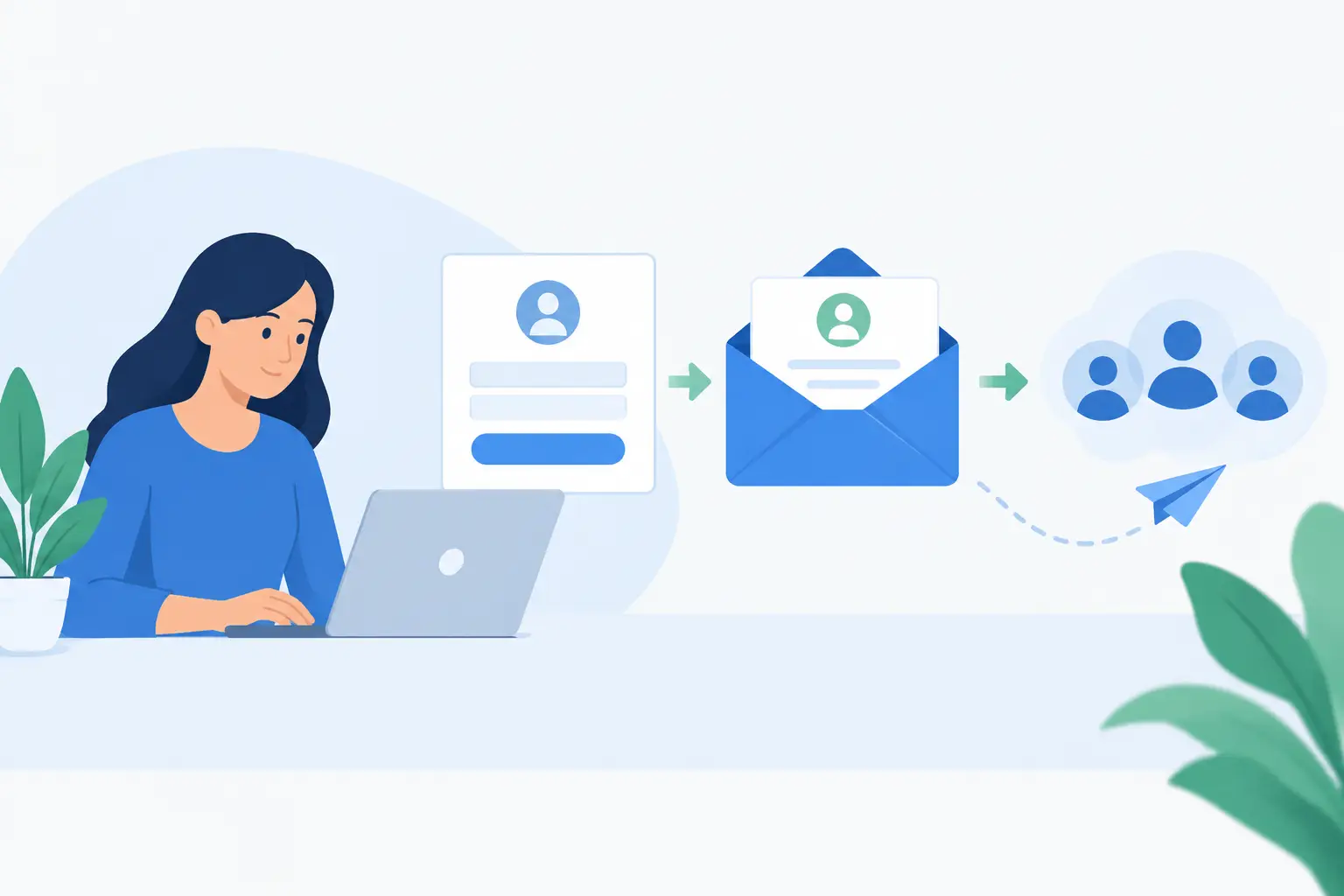
A useful resource should do more than earn a like, save, or view. It should give people a clear reason to stay connected. A simple email collection workflow turns the content you already publish into an owned audience, without sending people through a maze of pages, automations, and file-delivery steps.
For most creators and lean teams, the problem is not a lack of content. It is the gap after someone finds it. A viewer watches the video. A prospect reads the post. A client shares your template. Then they leave, and you have no way to reach them again.
Fix that gap with a workflow built around publishing, not funnel engineering.
What an email collection workflow should do
An email collection workflow is the path from attention to permission. Someone finds a piece of content, sees a relevant resource, enters their email address, and receives access. You keep the contact in a list you control.
That sounds obvious. Yet many setups make it unnecessarily hard. A resource lives in one tool, the opt-in page in another, the form in a third, and delivery depends on an automation that can break without warning. The creator ends up maintaining software instead of making the next useful thing.
A better workflow has three jobs: make the offer clear, make sign-up easy, and make the lead available to you. Everything else is optional.
The right level of complexity depends on your business. A large company with multiple products, sales routing, and detailed customer segmentation may need a larger system. But if you are building a newsletter, consulting practice, course audience, or niche media brand, the basics should not require a marketing operations project.
Write a resource people actually want
The email address is not the product. The resource is.
Start with a small, specific outcome. Broad promises attract broad curiosity and weak intent. A focused resource attracts people who can tell, in seconds, whether it is for them.
A career coach might publish a salary negotiation email script. A YouTube creator might offer the exact gear checklist used for a filming setup. A consultant might share a one-page audit framework. A newsletter operator might curate a weekly source list that saves readers research time.
The best lead magnets usually do one of three things: save time, reduce uncertainty, or provide a usable starting point. They do not need to be long. In fact, short resources often perform better because the value is easier to understand and easier to use.
Match the resource to the content that promotes it. If a video explains how to plan a workshop, offer a workshop planning checklist. If a post discusses customer interviews, offer the question bank. Do not attach an unrelated generic ebook just because it exists. Relevance does the conversion work.
Give the resource a plain title. Say what it is and who it helps. “Free guide” is weak. “Client Discovery Call Questions” is clear. Your audience should not have to decode the offer.
Publish one page, not a funnel
Once the resource is ready, put it on a page built for one decision: get access.
The page needs a recognizable cover or visual, a concise explanation, and supporting materials where useful. It should answer three questions quickly: What will I get? Why does it matter? What happens when I enter my email?
This is where many workflows become bloated. People add countdown timers, multi-step quizzes, forced account creation, and a chain of pages that exist only because a funnel template included them. Every extra step asks for more attention. Most of the time, it gives the visitor less value.
A single published resource page is enough for many offers. Create it, publish it, and use the resulting link wherever people already encounter your work. Sublead.io is designed around that direct path: build a resource page, publish it once, and collect contacts from one place.
Keep your ask proportional to the value. An email address is a fair exchange for a useful template, guide, list, or mini resource. Asking for a phone number, company size, budget, job title, and calendar booking before showing a one-page checklist is not.
Clarity also means setting expectations. Tell people what they are signing up for. If they will receive the resource and occasional notes from you, say so. If the resource is the only follow-up, say that instead. Good list growth is permission-based. It is not a trick.
Collect from the places attention already exists
You do not need to create a new promotion machine for every resource. Put the link in the channels you already use consistently.
A resource page can work especially well in:
- Video descriptions and pinned comments
- Social profile bios and featured posts
- Newsletter issues and email signatures
- Podcast show notes and guest appearances
- Relevant blog posts, community replies, and client follow-ups
The placement should follow the moment of interest. Mention the resource when the audience has just seen the problem it solves. A link at the end of a useful tutorial performs differently from a generic “join my list” link in a profile. One continues the experience. The other starts from zero.
Use a direct call to action. “Get the checklist” is stronger than “Learn more.” “Download the client brief template” is stronger than “Visit my website.” Specific language helps people decide without friction.
Do not spread one weak offer everywhere and hope volume fixes it. If people see the resource but do not opt in, check the match first. The offer may be too broad, unclear, or disconnected from the content sending traffic to it. Better alignment usually beats more promotion.
Keep leads in one place
The collection step is where your content turns into an asset.
Views are rented. Algorithm reach changes. Social platforms can limit distribution, change formats, or disappear from your audience's habits. A permission-based email list gives you a direct way to share your next resource, offer, update, or idea.
That does not mean every subscriber becomes a customer. It means you can continue the relationship without paying again to find the same person.
Centralize your contacts from the start. You should be able to see who signed up and export the list when you need it. A CSV export is simple, but it matters. It lets you take contacts to your email platform, analyze the list, organize a campaign, or keep a backup without being trapped in an all-in-one system.
Avoid collecting leads in scattered forms with no clear source of truth. That creates duplicate contacts, missed follow-ups, and confusion about who agreed to receive what. A lightweight workflow should reduce administrative work, not create it.
Improve the workflow after it is live
Do not wait for a perfect lead magnet system. Publish a useful resource and watch what happens.
If the resource gets clicks but few sign-ups, sharpen the page title and promise. If sign-ups are strong but people do not engage later, improve the follow-up or make the original offer more specific. If one channel sends better subscribers than another, prioritize that channel instead of treating every view as equal.
You do not need a complicated dashboard to learn these lessons. Pay attention to the basics: which resource gets shared, where sign-ups come from, and whether subscribers respond when you email them later. Those signals tell you more than a crowded funnel report.
Create a few resource pages over time, each tied to a recurring topic in your work. A consultant can build one for discovery calls, one for proposals, and one for project kickoffs. A creator can make one for each major content theme. This gives new visitors a relevant entry point without requiring you to rebuild the system every month.
The goal is not to collect the most emails possible. The goal is to collect emails from people who found something useful enough to ask for more.
Write the resource. Publish the page. Share the link where your work already gets attention. Then keep making useful things. That is an email collection workflow worth maintaining.