Creator Email Strategy That Starts With One Link
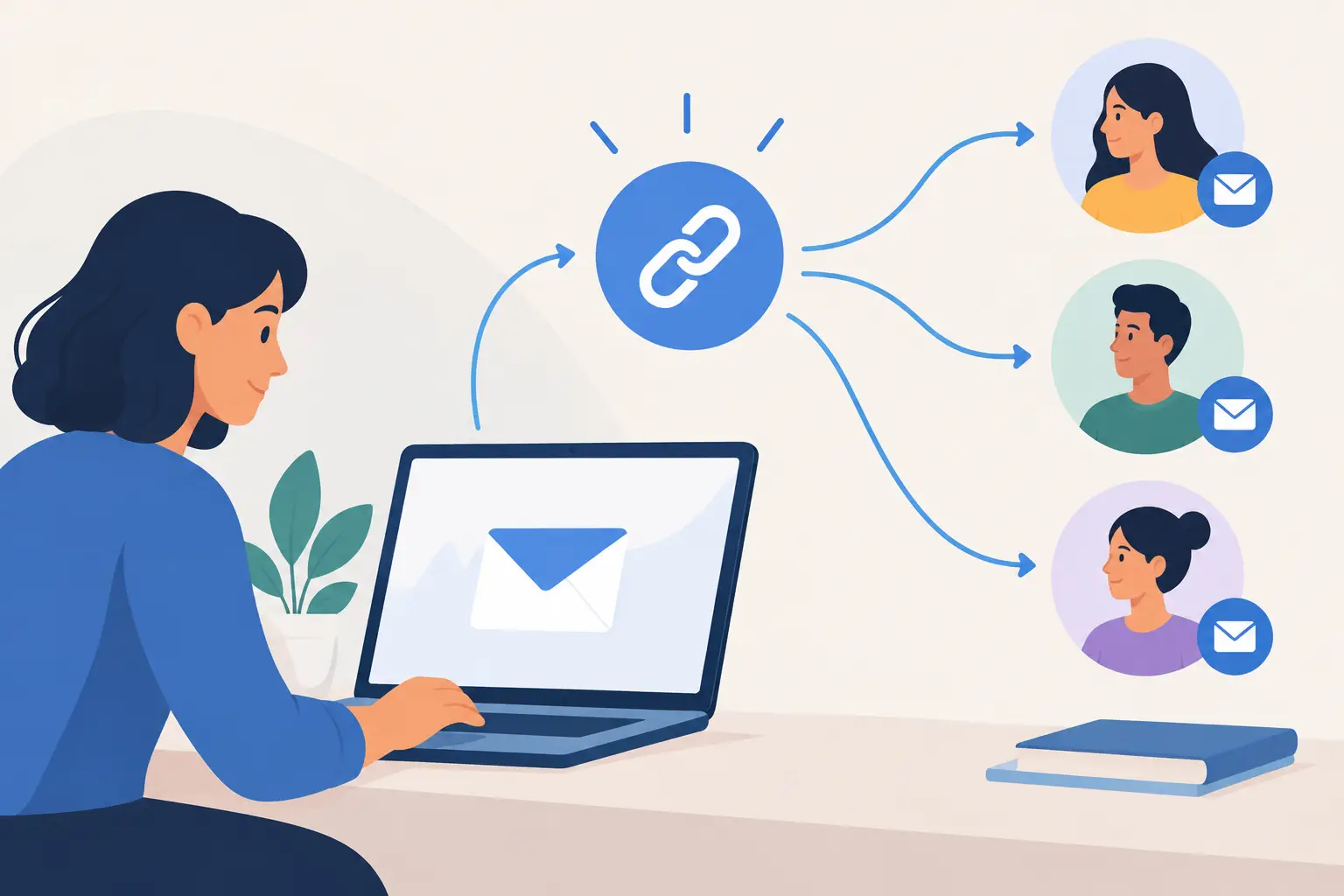
A video gets 20,000 views. A post earns a week of replies. Then the algorithm moves on, and most of those people are gone.
That is the gap a creator email strategy needs to close. Content creates attention. Email turns a portion of that attention into an audience you can reach directly. Not through a feed. Not when a platform decides to show your work. When you have something useful to send.
You do not need a 17-step funnel to make that happen. You need a clear reason to subscribe, a page that makes the next step obvious, and a habit of placing that link wherever attention already exists.
Your content is the top of the list
Creators often treat email growth as a separate marketing project. First, they publish content. Later, when they have more time, they build a lead magnet, a landing page, an automation, and a welcome sequence.
Later usually does not come.
A better approach is to treat each useful piece of content as the beginning of a direct relationship. If your video teaches a process, offer the checklist that helps someone use it. If your post shares an opinion, offer the examples, templates, or deeper notes behind it. If your newsletter mentions a recurring problem, offer a resource that solves one practical part of that problem.
The goal is not to gate everything you make. Your public content should stand on its own. The resource is for the person who wants to act, save time, or go deeper. That distinction matters. A weak lead magnet says, "Give me your email for more." A strong one says, "Here is the exact thing that makes this useful today."
Think in extensions, not bait. A fitness coach can offer a weekly meal-planning template beneath a nutrition video. A consultant can offer a project kickoff document after explaining common scope mistakes. A newsletter operator can share a curated reading list that supports a popular issue. Each resource has a clear job.
Build a creator email strategy around one useful exchange
The fastest way to complicate list growth is to start with software. Start with the exchange instead.
Ask one question: what would make the right person glad they gave you their email address?
The answer is usually smaller than creators expect. It does not need to be a 40-page ebook. In fact, large resources often create a delay problem. You spend weeks making them, then hesitate to revise them because they took so much effort.
Short, specific resources are easier to publish and easier to promote. A swipe file, a calculator, a client questionnaire, a lesson plan, a prompt pack, a resource list, or a decision framework can be enough. The best format depends on what your audience is trying to do.
If they need to make a decision, give them a framework. If they need to complete a repeated task, give them a template. If they need to avoid mistakes, give them a checklist. If they need context, give them a concise guide.
Specificity also qualifies your list. A generic "free guide" may attract a lot of people who never become readers, clients, or customers. A resource called "The 10-Minute Discovery Call Prep Sheet" attracts people who have a discovery call coming up. Fewer signups can be better if they come from people who match your work.
This is where trade-offs matter. A broad resource may grow the list faster. A narrow resource may bring in better-fit subscribers. Neither is automatically right. If you are early, a focused resource connected to your main offer usually gives you clearer signals and stronger conversations.
Write the page before you build anything else
A lead capture page does not need a full sales page. It needs to answer a few basic questions fast: What is this? Who is it for? What will I get? Why should I care now?
Write the page like you would explain the resource to a smart person who has two minutes between meetings. Lead with the outcome, not the format. "Plan your next workshop in 30 minutes" is stronger than "Download my workshop PDF." The format can appear below. The result belongs first.
Use a simple structure: a direct headline, a short explanation, a visual if it helps people understand the resource, and a clear email field. Add a few details about what is included when the resource needs context. Then stop.
Too much copy creates doubt. Too little copy creates confusion. The right amount depends on the ask. A simple checklist needs very little explanation. A resource that asks for more commitment, such as a multi-day email course, deserves more detail about what subscribers will receive and when.
This is also the point to remove delivery plumbing. You should not need to assemble a landing page, upload files somewhere else, wire together forms, and troubleshoot a chain of integrations just to share a useful resource. With Sublead.io, you can create a resource page, publish it, and collect emails from the same link. That keeps the work close to publishing, where it belongs.
Put the link where intent already exists
A lead magnet does not work because it exists. It works because the right people see it at the moment it becomes relevant.
Start with content that already earns attention. Add the resource link to the description of a related video. Mention it in the first comment or a pinned reply when that fits the platform. Put it in your profile bio if it represents your core topic. Include it in relevant newsletter issues, podcast notes, community posts, and client follow-up messages.
Do not paste the same vague call to action everywhere. Match the invitation to the content. After a post about pricing, invite people to get the pricing worksheet. After a tutorial, point to the starter template. After a story about a hard-earned lesson, offer the framework you wish you had used earlier.
The placement itself matters. A link buried after ten paragraphs will get less action than one placed directly after the moment of value. If someone just learned something useful, they are more likely to want the supporting resource right then.
Repeat the offer without apologizing for it. New people find your work every day. Even longtime followers may not have seen the resource the first time. Mentioning a useful tool again is not noise when the context changes.
Send a first email that keeps the promise
Getting the address is not the finish line. It is the moment to prove that subscribing was a good decision.
Your first email should deliver the resource or clearly point to it. Then add a short note that sets expectations. Tell subscribers what you write about, how often you send, and why it will be worth opening. Keep it human and concrete.
This is a good place to ask one simple question. A consultant might ask, "What are you trying to improve before your next client project?" A creator teaching video may ask, "What is slowing down your editing process?" Replies give you language, topic ideas, and a clearer picture of who joined.
You do not need a complex automated sequence on day one. A welcome email and a consistent publishing rhythm are enough to start. As your list grows, you can add more structure based on what subscribers actually need. Build systems after you see repetition, not before.
Measure behavior, not vanity
Subscriber count is useful, but it is incomplete. A list of 500 people who read, reply, and buy can be more valuable than a list of 10,000 people who forgot they signed up.
Watch which resources attract signups, where those signups come from, and what happens after the first email. If one template gets steady subscribers from a video description, make more content around that problem. If a broad guide brings emails but no replies or clicks, tighten the promise or test a more focused topic.
Keep a simple record of the source for each resource. You do not need a dashboard with fifty metrics. You need enough information to answer: what content brings the right people onto my list?
Exporting contacts regularly also gives you control. Your list should remain usable even if you change tools later. Ownership is not just a slogan. It is the practical ability to take your audience data with you.
The most durable email list is built one useful exchange at a time. Publish something worth keeping. Give people a clear next step. Collect the address. Then send work that makes them glad they raised their hand.